
Imagine a patient unable to understand discharge instructions, a parent struggling to advocate for their child, or a citizen denied access to essential services, all because of a language barrier. For millions with limited English proficiency (LEP), these are daily realities. The results lead to miscommunication, frustration, legal exposure, and loss of trust.
At Geneva Worldwide, we’ve spent over 120 years helping organizations close these gaps. A strong Language Access Plan (LAP) is not just a compliance requirement, it’s a commitment to equity, safety, and inclusion. Yet moving from intention to effective implementation presents real challenges.
Ready to make every voice heard?
Start with a complimentary LAP assessment; Contact us today and see how your organization can move from compliance risk to true community connection.

Why a Language Access Plan (LAP) Is Mission-Critical
What Is a Language Access Plan?
A Language Access Plan (LAP) is a formal, organization-wide policy that ensures everyone, regardless of language ability, has meaningful access to information and services. It covers individuals with limited English proficiency, the deaf or hard-of-hearing, and anyone facing communication barriers.
A well-executed LAP is not just about legal compliance such as Title VI of the Civil Rights Act of 1964; it’s about demonstrating respect, building trust, and delivering equitable services.
When organizations prioritize people over compliance alone, the benefits of a Language Access Plan are meaningful.
Who Benefits from a Strong LAP?
- Clients & Customers: Receive clear, accurate, and respectful communication, enabling them to make informed decisions and fully participate.
- Employees: Feel empowered to serve all populations confidently, reducing stress and uncertainty.
- Communities: Gain equitable access to resources, building trust and encouraging participation.
- Organizations: Avoid legal risk, enhance reputation, and fulfill their mission of service.
A strong LAP is a win-win. When everyone can participate, everyone wins.
The Real-World Challenges of LAP Implementation
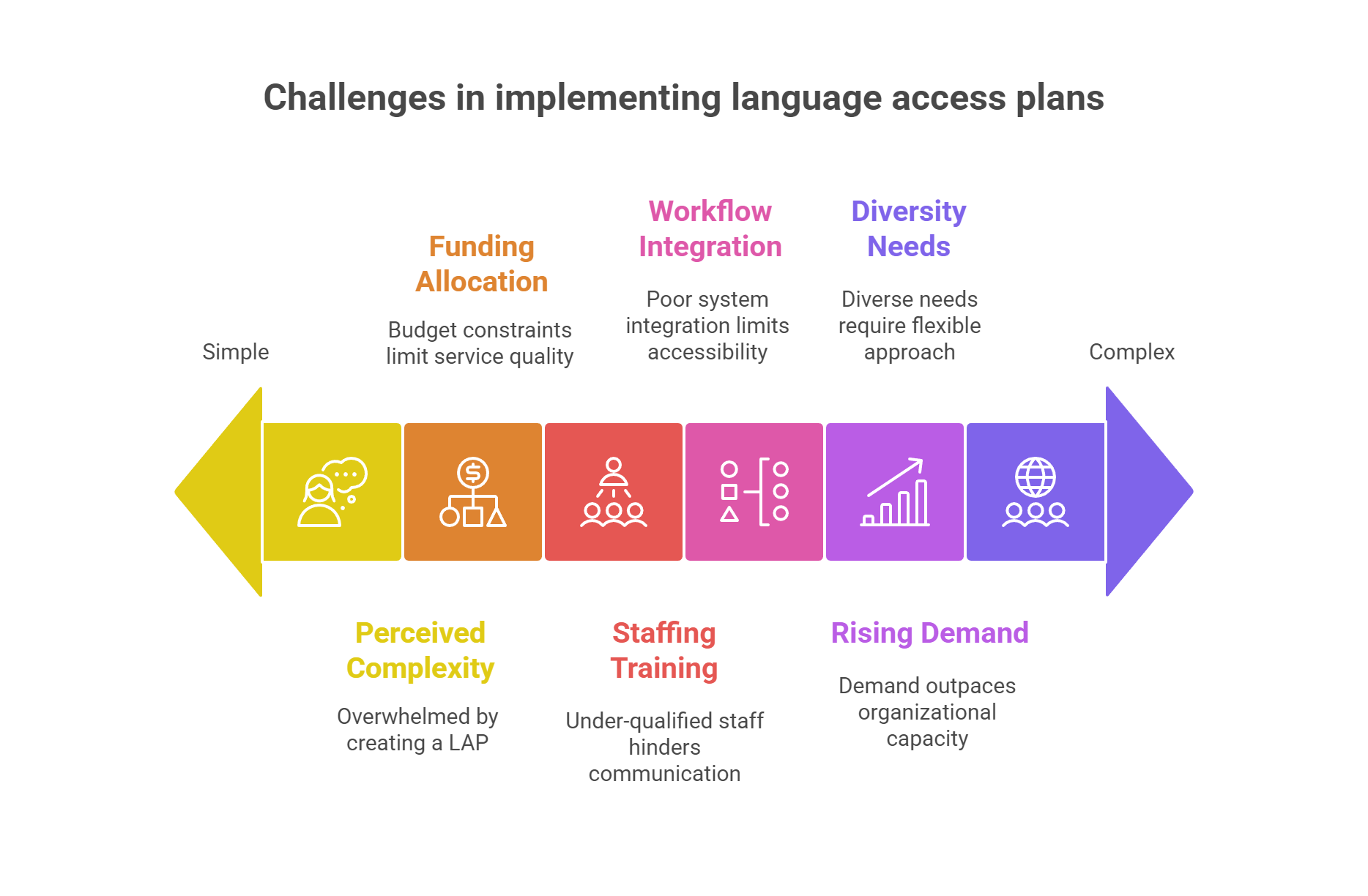
Despite the best intentions, implementing a Language Access Plan is rarely straightforward. Organizations across healthcare, legal, government, education, non-profit, and private sectors face a complex landscape of obstacles.
Here’s what our clients and partners tell us are their biggest challenges and what we’ve learned from guiding them through the process.
1. Funding and Resource Allocation
Budget constraints are a number hurdle. Many organizations, especially in government and non-profit sectors, lack funds for professional translation and interpretation. This often leads to using untrained staff or family members, creating risks for confidentiality, accuracy, and safety.
High demand for services like simultaneous interpretation or support for rare languages can quickly overwhelm resources. As communities diversify and regulations increase, the need for quality language access often outpaces organizational capacity.
Technology can also be a barrier. Video remote interpretation (VRI) and telehealth platforms offer flexibility, but glitches or limited access can disrupt critical conversations, posing real risks to care and service.
2. Staffing and Training
Under-qualified interpreters are a common pitfallWell-intentioned bilingual staff or family members may step in to help. Without specialized training, they often lack the code of conduct, ethical understanding, and subject-matter expertise needed for accurate and confidential communication.
Limited bilingual staff means not every department or location has the support it needs, especially for less common languages or after-hours needs. This creates bottlenecks, delays, and can leave some clients without support.
Lack of staff awareness is another frequent issue. Even with a LAP in place, employees may be unaware of available language services or how to access them, leading to inconsistent support for LEP individuals. Eventually this leads to frustrations for both staff and clients.
Insufficient training leaves staff unprepared to handle language access requests effectively. Training is often a one-time event, when in reality, ongoing education and hands-on practice are needed to keep skills sharp and protocols top-of-mind.
3. Diversity and Complexity of Needs
Failure to identify preferred language can be a serious error. It’s easy to assume someone’s language based on their nationality for example, assuming all Central Americans speak Spanish, but this can lead to major misunderstandings, especially with indigenous or minority languages. Correctly identifying an individual’s preferred language is foundational to effective service.
Diverse communication needs require a flexible approach. Some situations demand written translation e.g., consent forms, others require in-person interpretation e.g., sensitive medical or legal conversations, and still others call for accommodations for disabilities e.g., sign language interpretation, plain language documents.
4. Implementation and Workflow Integration
Fragile internal relationships can undermine even the best plans. If leadership, management, and frontline staff aren’t all on board, implementation can stall. Buy-in at every level is essential.
Poor community engagement means organizations miss out on valuable feedback and insights. Building relationships with the communities served ensures the LAP is relevant, effective, and culturally competent. When community members are involved in the planning and evaluation process, outcomes improve dramatically.
Inconsistent application across departments or locations creates confusion for clients and staff alike. The quality and availability of language access should not depend on which department someone interacts with, yet this is a common reality.
Poor system integration makes language services hard to access and use, especially if they’re not embedded in existing workflows or supported by user-friendly technology. If the process to request an interpreter is cumbersome, staff may skip it altogether.
5. Perceived Daunting Complexity
Creating a LAP from scratch can get overwhelming for organisations. The fear of missing something critical or simply not knowing where to start leads to analysis paralysis or inaction. It’s not uncommon for organizations to delay implementation for months or even years due to this perceived complexity.
6. Keeping Pace with Rising Demand
As communities grow and diversify, the need for language services can outpace an organization’s ability to adapt. Sudden surges, due to demographic shifts, emergencies, or policy changes quickly overwhelm existing resources. If a plan isn’t flexible and scalable, organizations find themselves constantly playing catch-up.
The High Cost of Inaction: What Happens Without a Robust LAP
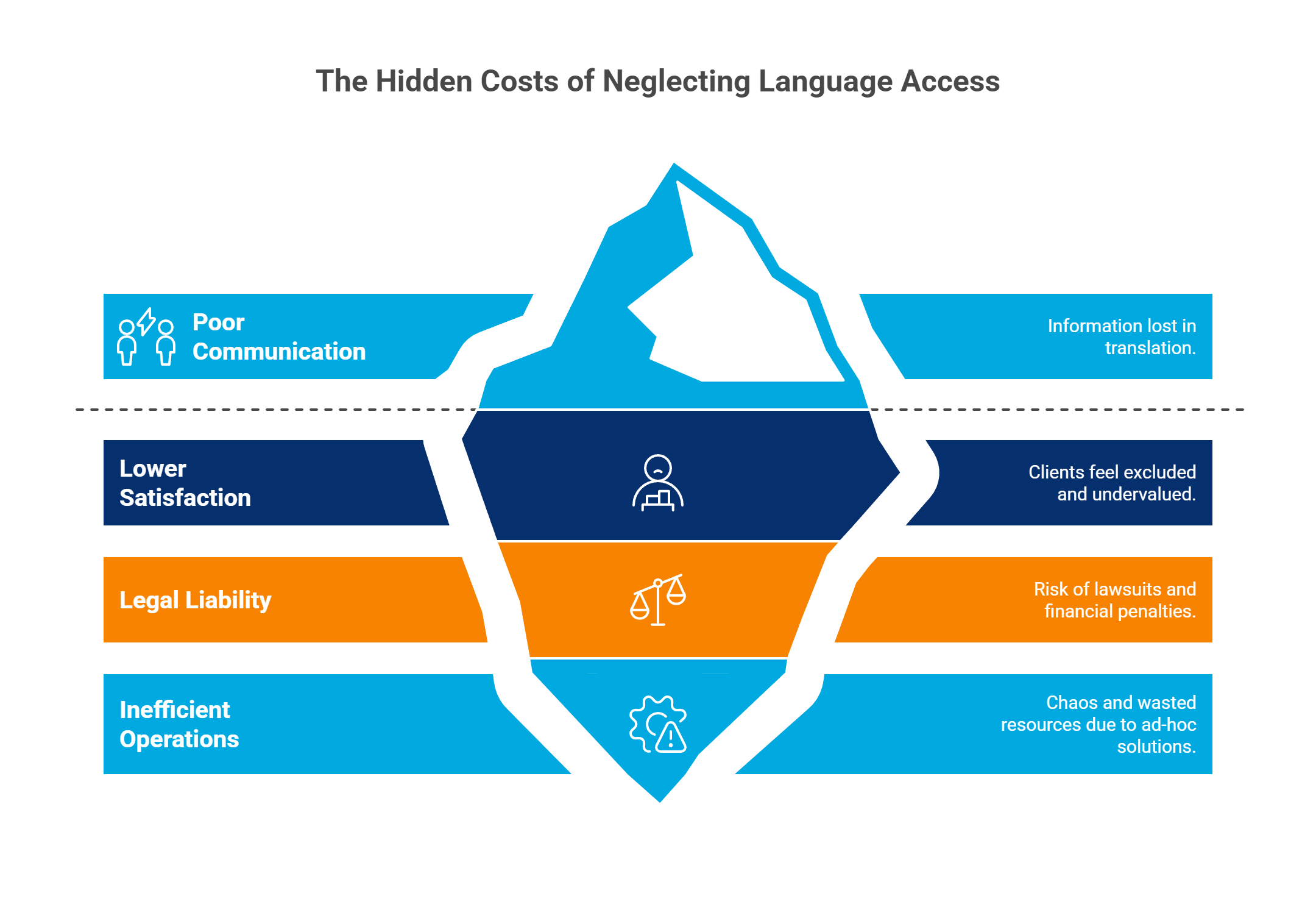
While the challenges of implementing a Language Access Plan are real, the consequences of not addressing them are far more severe. When organizations overlook or under-invest in language access, the effects ripple across every level of service and community engagement.
Poor Communication and Misunderstandings
Without a structured LAP, communication gaps are inevitable. Critical information gets lost in translation, leading to misunderstandings, misinformation, and preventable errors.
In healthcare, this can mean a patient misunderstanding medication instructions or a family missing out on vital resources.
In legal, educational, or government settings, it can result in missed deadlines, lost opportunities, and confusion. Staff can also feel frustrated and helpless when they can’t serve clients effectively.
Lower Satisfaction and Lost Trust
Clients who don’t receive appropriate language assistance are more likely to report dissatisfaction with their experience. They may feel excluded, undervalued, or even unsafe.
Over time, this erodes trust in the whole organisation, not just a single department.. Word spreads quickly, and negative experiences can damage your reputation in the very communities you aim to serve.
Legal and Financial Liability
Failure to provide adequate language access isn’t just a service issue, it’s a legal one. Organizations, especially in regulated sectors like healthcare and government, face significant risk of lawsuits, fines, and loss of funding.
The legal landscape is clear on the matter, under Title VI of the Civil Rights Act and other regulations, meaningful language access is not optional.
Inefficient Operations and Increased Costs
Operationally, the absence of a coordinated LAP leads to chaos. Scheduling conflicts, delays, and duplicated efforts become routine as staff scramble to find ad-hoc interpreters or redo work due to misunderstandings.
Administrative burdens increase, and resources are wasted on reactive fixes instead of proactive solutions. Ultimately, this inefficiency drives up costs and takes a toll on staff morale.
The bottom line:
The true cost of silence is measured in lost opportunities, diminished outcomes, legal exposure, and broken trust. That’s why investing in a robust Language Access Plan isn’t just the right thing to do, it’s the smart thing to do for your organization, your clients, and your community.
Solutions: How to Overcome LAP Implementation Challenges
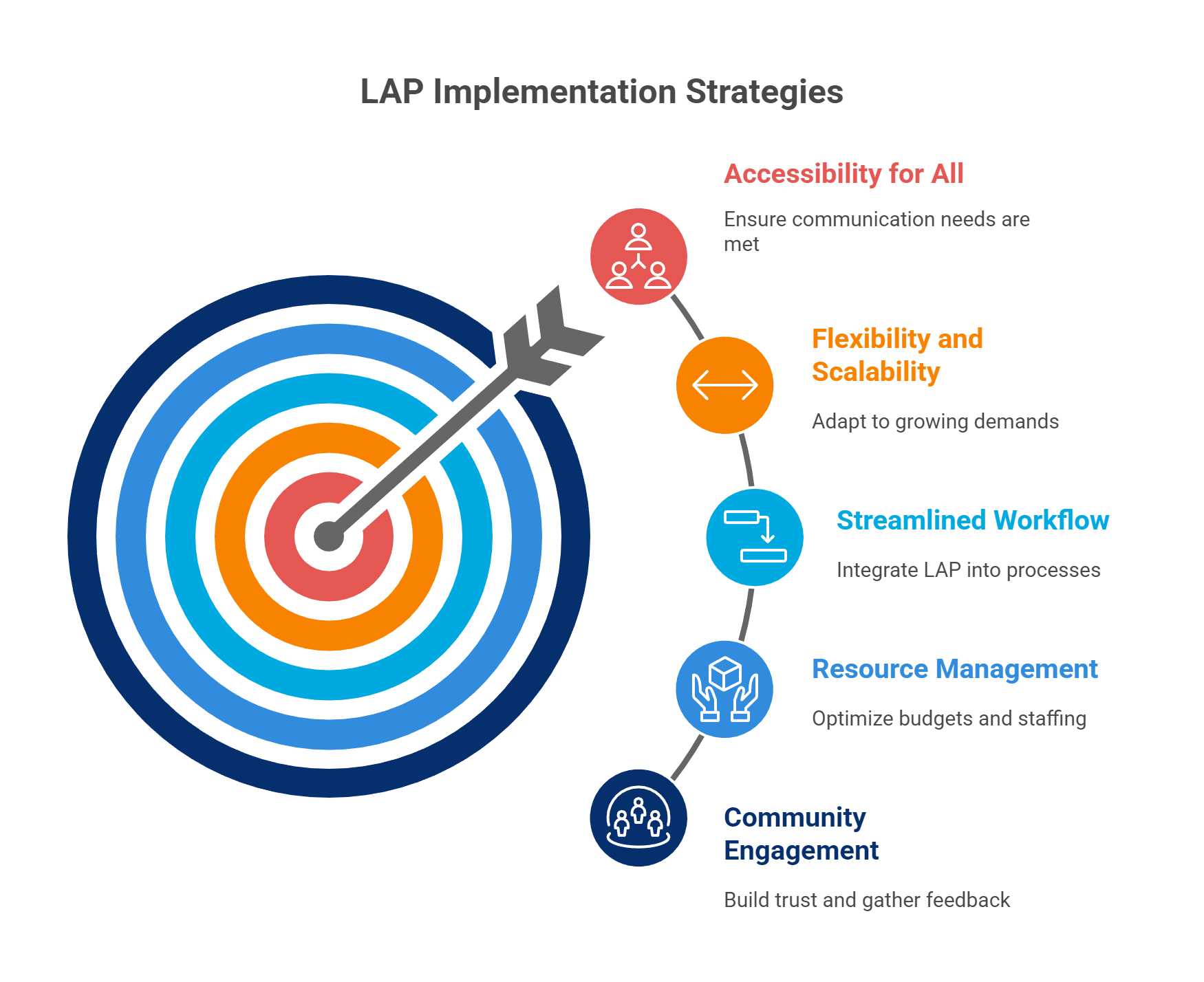
At Geneva Worldwide, we believe every challenge is an opportunity for innovation and improvement. Here’s how organizations can move from obstacles to outcomes and how we help them every step of the way.
Prioritize Key Services and Budget Strategically
- Focus resources on the most high-impact documents, interactions, and the most frequently needed languages. For example, prioritize medical consent forms, legal notices, and critical client communications.
- Seek grants and policy support to supplement budgets, especially in resource-constrained sectors. We guide clients to funding sources and advocate for policy changes that make language access sustainable.
- Centralize management of language access activities to avoid duplication, reduce costs, and ensure consistent quality across departments.
Build Alliances with Community Leaders
- Engage community stakeholders early and often to understand real needs, build trust, and receive culturally competent feedback. This means reaching out to local leaders, advocacy groups, and clients themselves.
- Establish feedback loops so community members can share their experiences and help improve the LAP. Surveys, focus groups, and open forums all play a role.
Mandate and Enhance Staff Training
- Implement regular, mandatory training for all staff, not just on procedures, but on cultural competence and the importance of language access. Training should be interactive, using real-world scenarios and role-play.
- Develop clear protocols and quick-reference guides so employees know exactly how to access language services at the moment.
- Appoint a language access coordinator to oversee training, compliance, and ongoing improvement, ensuring that language access remains a priority, not an afterthought.
Leverage Technology – But Plan for Contingencies
- Use remote interpretation platforms and language identification tools to make access quick and seamless. Technology can extend your reach, but it must be reliable and user-friendly.
- Prepare for technical issues with backup plans and regular system testing. For example, have a phone-based option available if video interpretation fails.
Regularly Review Data and Adapt
- Track community demographics and language needs using census data, intake forms, and community feedback. This allows organizations to anticipate changes and adjust resources proactively.
- Adjust the LAP as populations and needs evolve, ensuring continued relevance and effectiveness. A plan should be a living document, not a static policy.
Address Resource Limitations and Staffing Gaps
- Expand your network of professional interpreters and translators, especially for rare languages. Geneva Worldwide continually recruits and vets new talent to ensure reliability.
- Reduce reliance on ad-hoc interpreters by ensuring on-demand access to qualified professionals. This protects confidentiality, improves outcomes, and builds trust.
Ensure Accessibility for All
- Plan inclusively for people who are deaf, hard-of-hearing, or have other communication needs. This includes offering sign language interpretation (ASL), plain language documents, and accessible digital resources.
- Provide multiple modes of access be it written, spoken, in-person, and virtual to meet diverse preferences and needs.
Streamline Workflow Integration
- Map out every touchpoint where language access is needed, and embed services into existing processes. This might include intake, scheduling, customer service, and more.
- Promote internal collaboration and leadership buy-in to drive organization-wide consistency and accountability.
Simplify the Process
- Break down LAP implementation into manageable steps, using templates, checklists, and expert guidance. Our team provides hands-on support from planning to rollout.
- Offer personalized consultations to tailor the plan to your unique needs, making the process approachable and achievable.
Build Flexibility to Meet Growing Demand
- Design scalable services that can grow with your organization, so you’re never caught off guard by rising demand.
- Continuously improve by soliciting feedback, reviewing data, and making adjustments as needed. A strong LAP evolves with your community.
The Geneva Worldwide Difference: Your Strategic Partner for Language Access
With over 120 years of experience, Geneva Worldwide is more than a service provider, we’re your partner in building inclusive, effective, and future-ready language access programs.
Our team of certified interpreters, translators, and cultural consultants ensures accuracy, confidentiality, and cultural competence at every step.
- Thorough Needs Assessment: We start by understanding your unique context, challenges, and community. No two organizations are alike, and neither are our solutions.
- Custom Solutions: Every LAP is tailored to fit your workflows, population, and goals. Our approach is collaborative and data-driven.
- Seamless Integration: Our solutions fit your existing systems, minimizing disruption and maximizing impact. We work alongside your teams to ensure smooth adoption.
- Ongoing Support: From regular training to compliance checks, we’re with you for the long haul. We believe in continuous improvement and are always available for guidance and troubleshooting.
For a detailed breakdown, learn more via our Guide to Language Access Plans, or schedule a consultation with our experts.
Frequently Asked Questions about Language Access Plans (LAPs)
What is a LAP plan?
A Language Access Plan (LAP) is a formal policy outlining how an organization ensures meaningful access to services for individuals with limited English proficiency or other communication needs.
Who needs a language access plan?
Any organization serving diverse populations, especially in healthcare, legal, government, education, and non-profit sectors should have a LAP. If you’re unsure, Geneva Worldwide can help assess your needs.
How do I get started?
Begin with a needs assessment. Geneva Worldwide offers complimentary consultations to help you identify gaps, prioritize actions, and develop a roadmap for implementation.
What are the legal requirements?
Title VI of the Civil Rights Act mandates that federally funded organizations provide meaningful access for LEP individuals. Requirements may vary by industry and location, and Geneva Worldwide can help you navigate them.
What does Geneva Worldwide offer?
We provide end-to-end language access solutions, from needs assessment and plan design to professional interpretation, translation, staff training, and ongoing support. Our mission is to make your organization more inclusive, compliant, and effective.
Get Future-Ready: Start Your LAP with Geneva Worldwide
The cost of silence is too high, missed messages, lost trust, and legal risk are just the beginning. But with the right Language Access Plan, your organization can foster true inclusivity, compliance, and operational success.
Take the next step:
- Book a free consultation with our LAP specialists.
- Learn more via our detailed Guide to Language Access Plans (LAP).
At Geneva Worldwide, we’re passionate about helping you break barriers and serve your community with excellence.
