
The High Stakes of Healthcare Communication
In healthcare, clear communication can be the difference between a smooth recovery and serious complications. Even a small misunderstanding can delay treatment or put a patient at risk. For those who don’t speak English fluently, the stakes are even higher. Language barriers become more than just an inconvenience; they’re a direct threat to patient safety, health outcomes, and legal compliance.
That’s where professional medical interpreters step in. At Geneva Worldwide, 120+ years of experience show that bridging communication gaps builds trust, expertise, and knowing the legal and ethical rules. We believe language access is not a gamble; it’s a relationship built on accountability, care, and unwavering standards.
Learn how Geneva Worldwide ensures compliant, expert medical interpretation services.
Explore our guide to medical interpretation for safer, more effective patient care.

Legal Foundation – The Mandate for Language Access
Providing language access in healthcare is more than just best practice, it is the law. Healthcare organizations that receive federal funding are required under Title VI of the Civil Rights Act of 1964 to offer meaningful language assistance to patients with Limited English Proficiency (LEP). This isn’t optional; it’s a non-discrimination mandate.
The Affordable Care Act (ACA) Section 1557 takes this further, explicitly requiring the use of a qualified interpreter. This means it’s not enough to grab a bilingual staff member or ask a patient’s relative to help out. A qualified medical interpreter must be proficient in medical terminology, trained in the nuances of healthcare communication, and committed to a strict code of ethics.
The Specific Legal Responsibilities of Medical Interpreters
Medical interpreters’ legal responsibilities are broad and include, but are not restricted to:
- Federal Mandate for LEP Patients: Under Title VI of the Civil Rights Act of 1964 and Section 1557 of the ACA, facilities receiving federal dollars must ensure language services are available for patients who have Limited English Proficiency (LEP).
- Confidentiality Obligation: Interpreters are legally bound by patient privacy mandates, including HIPAA, just like every other member of the healthcare staff.
- Duty to Correct Errors: To ensure precision and prevent harm to the patient, an interpreter must promptly remedy any mistakes made during the interpretation.
- Mandatory Reporting: Interpreters are under a legal duty to report specific situations, such as child abuse, elder abuse, or certain injuries, as stipulated by state law.
Why does this matter?
Using unqualified interpreters like family members or untrained staff can result in miscommunication, legal liability, and even loss of federal funding.
The Cornerstone of Trust – Confidentiality and HIPAA Compliance
Medical interpreters do more than facilitate communication; they are entrusted with access to highly sensitive data, including Protected Health Information (PHI). Accordingly, they are subject to the same strict confidentiality and privacy obligations that apply to physicians, nurses, and other healthcare professionals under the Health Insurance Portability and Accountability Act (HIPAA).
For organizations like Geneva Worldwide, this often means acting as a Business Associate under HIPAA, which comes with formal Business Associate Agreements (BAAs) that legally require us to protect PHI with the utmost care. We follow the minimum necessary standard, interpreters only access or share the information absolutely needed to do their job.
But confidentiality isn’t just a legal requirement; it’s the ethical cornerstone of our profession. Patients and providers need to know that what’s said in the exam room stays there.
When patients share sensitive health information, confidentiality is critical. A breach of trust can lead patients to withhold important details or avoid care entirely. At Geneva Worldwide, our interpreters are trained not only in HIPAA compliance but also in the essential responsibility of protecting patient privacy and dignity at every step.
Ethical Principles – Ensuring Quality of Care and Accuracy
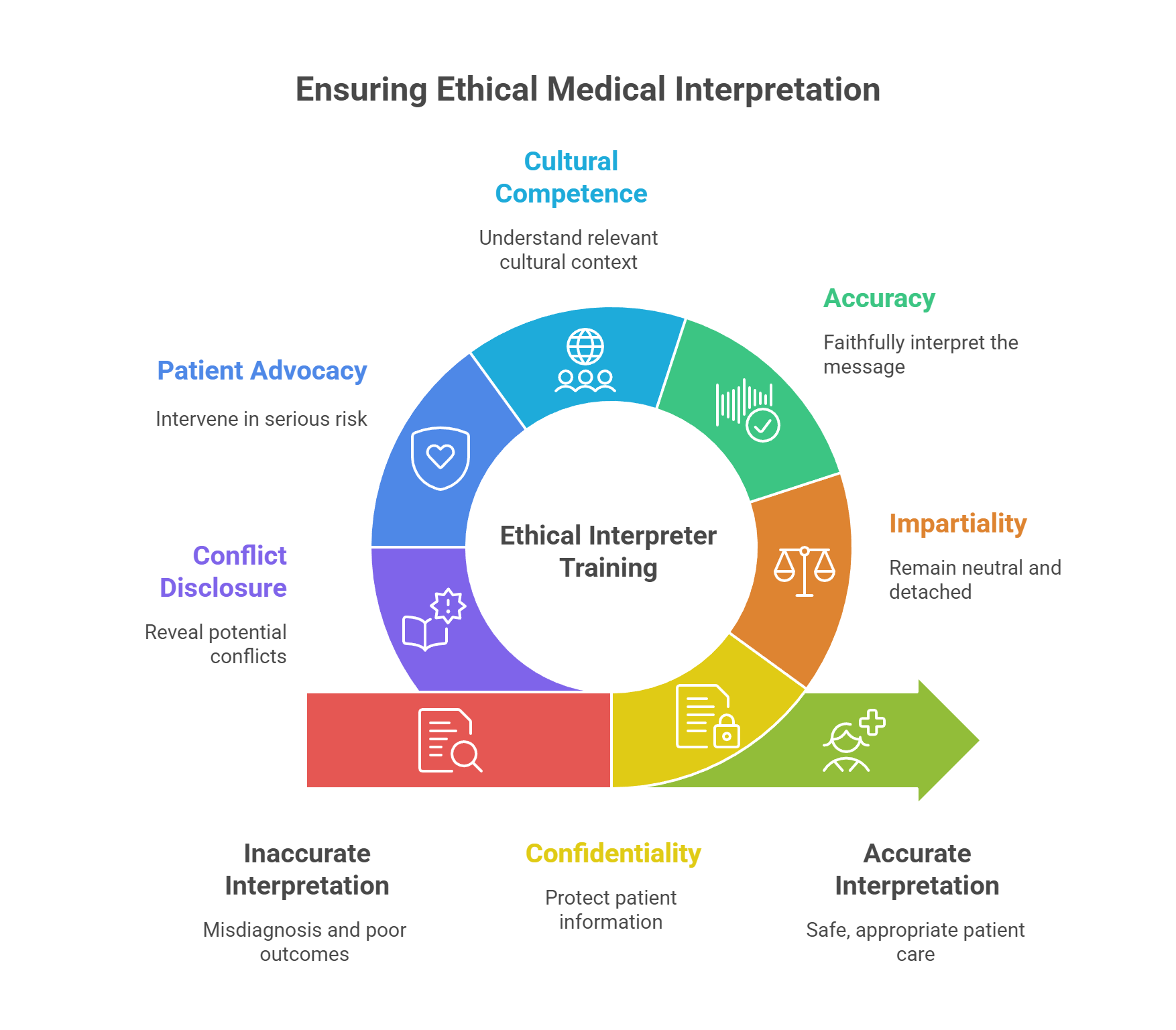
Accuracy in medical interpretation is not optional; it is essential to patient safety and the delivery of appropriate care. Our interpreters are trained to faithfully and accurately render every message, without omission, addition, or editing. Even a small error can lead to misdiagnosis, medication mistakes, or poor outcomes.
The Specific Ethical Responsibilities of Medical Interpreters
Ethical responsibilities for medical interpreters include, but are not limited to:
- Confidentiality: The core principle that prohibits interpreters from disclosing any patient information without authorization.
- Impartiality: The requirement to remain neutral and detached, avoiding bias or personal intervention in the communication.
- Accuracy: The mandate to faithfully and accurately interpret the entire message, without omission or addition.
- Cultural Competence: The need to understand relevant cultural context and customs to prevent misunderstandings that go beyond simple words.
- Patient Advocacy: The duty to intervene only when a serious and immediate risk to a patient’s health, safety, or dignity exists.
- Conflict of Interest Disclosure: The obligation to reveal any potential conflict of interest to ensure the integrity of the service.
Impartiality is equally crucial:
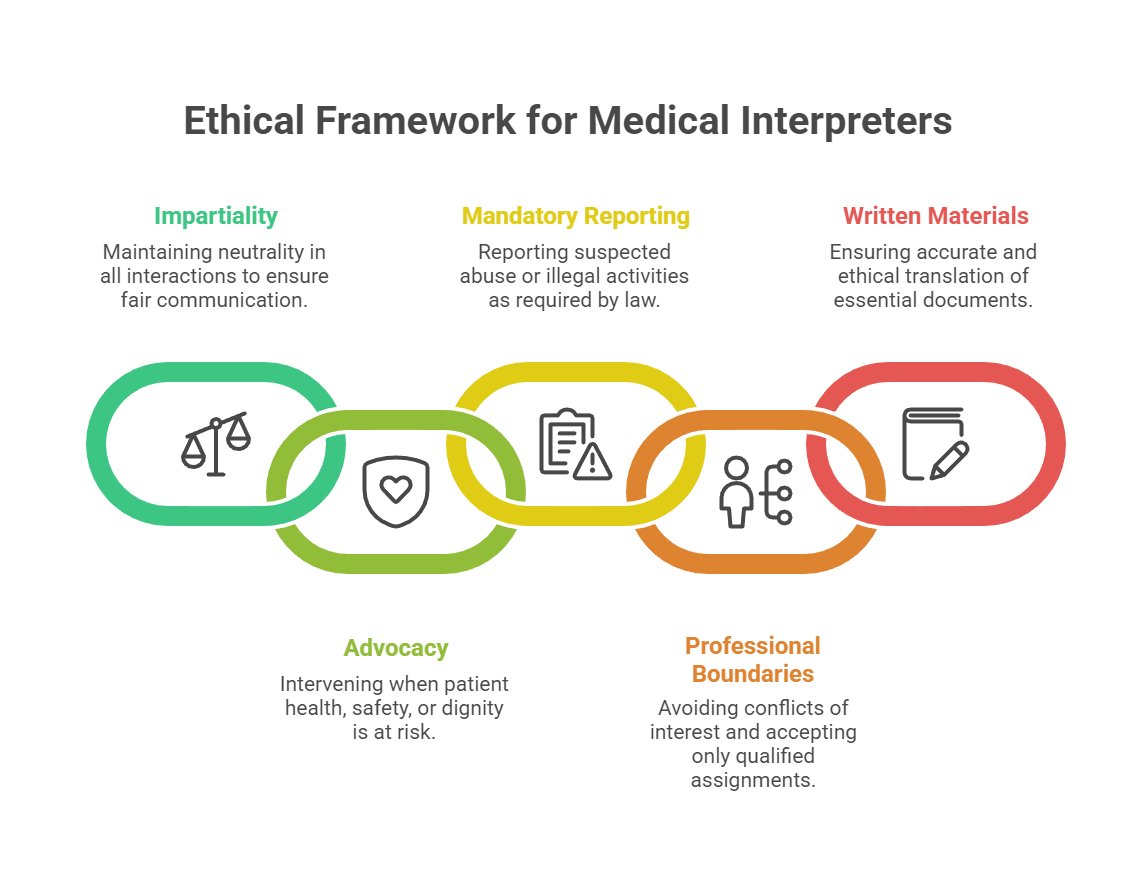
Interpreters must remain neutral, never injecting personal opinions or advice. Their job is to facilitate understanding, not to influence decisions, unless clarification is absolutely needed. This impartiality is especially vital when it comes to informed consent, where patients must fully understand their diagnosis, treatment options, and risks.
Cultural Competence – More Than Words
Language carries context, culture, and nuance. Our interpreters are trained to recognize and bridge cultural differences that could impact care. That’s why Geneva Worldwide invests in ongoing cultural competence training, ensuring our teams help prevent misunderstandings and foster respectful, patient-centered care.
Boundaries, Reporting, and Professionalism
A professional medical interpreter knows where their role begins and ends. While their primary duty is to remain impartial, there are rare moments when advocacy is required specifically, when a patient’s health, safety, or dignity is at immediate risk. Even then, this is a last resort, guided by professional judgment and ethical codes.
Mandatory Reporting:
Interpreters, like all healthcare professionals, have a legal duty to report certain situations such as suspected child or elder abuse when required by law. In these cases, the obligation to report overrides confidentiality, and our interpreters are trained to navigate these complex scenarios with care and professionalism.
Professional Boundaries:
Our interpreters are transparent about any potential conflicts of interest and only accept assignments for which they are fully qualified. This ensures every client receives the highest standard of service, every time.
Written Materials:
Legal and ethical responsibilities extend to the translation of essential written materials. Under ACA Section 1557, these must be handled by a qualified medical translator, another area where Geneva Worldwide’s expertise stands out.
Checklist for Healthcare Organizations:
- Confirm interpreter credentials and training
- Ensure BAAs are in place for outsourced providers
- Verify ongoing education in legal, ethical, and cultural standards
- Use only qualified translators for written materials
Geneva Worldwide’s Approach – Setting the Standard for Quality and Compliance
It is our commitment to quality, compliance, and trust that makes us stand out. For over a century, we’ve built our reputation on the expertise of our people and the strength of our processes.
Our Promise:
- Every interpreter is vetted, trained, and reviewed by experts
- Ongoing education in legal, ethical, and cultural competence
- Strict adherence to IMIA and NCIHC codes of ethics
- Robust protocols for HIPAA and PHI protection
- Proactive risk mitigation for our clients
As our CEO, Craig Buckstein often says, “Our job is to make language access seamless and secure, so you can focus on what matters most: your patients.” We don’t take shortcuts, and we don’t compromise because we know what’s at stake.
Explore our full range of professional interpretation solutions.
Frequently Asked Questions (FAQs)
Why can’t we use bilingual staff or family members as interpreters?
Federal law requires “qualified interpreters” who are trained in medical terminology and ethics. Using untrained individuals increases the risk of errors, breaches confidentiality, and exposes your organization to legal liability.
How does Geneva Worldwide ensure interpreter quality?
All our interpreters undergo rigorous vetting, continuous training, and are held to the highest standards of legal, ethical, and cultural competence. We regularly review performance and provide ongoing education.
What is a Business Associate Agreement (BAA), and why does it matter?
A BAA is a legal contract required by HIPAA when a third-party service provider handles PHI. It ensures that the provider, like Geneva Worldwide, upholds strict data protection standards.
How do you handle rare languages or dialects?
Geneva Worldwide maintains a vast network of professional interpreters and translators, covering a wide range of languages and dialects. We match each assignment with the best-qualified expert for the specific need.
What makes Geneva Worldwide different from other providers?
Our legacy, commitment to compliance, and people-first approach set us apart. We’re not just a vendor, we’re your partner in patient safety and organizational excellence.
At Geneva Worldwide, we don’t just interpret words, we build bridges of trust, one conversation at a time.
Partnering with Proven Expertise
Language access goes far beyond meeting basic requirements; it strengthens patient safety, reinforces trust, and elevates the standard of care across the entire organization. When you partner with Geneva Worldwide, you’re choosing a team with over 120 years of experience, a relentless commitment to compliance, and a passion for making every conversation count.
Language access shouldn’t be an afterthought. Protect your patients, meet regulatory obligations, and minimize legal risk with a trusted partner.
Ensure your language access program meets the highest legal, ethical, and patient-centered standards
Contact Geneva Worldwide today.
